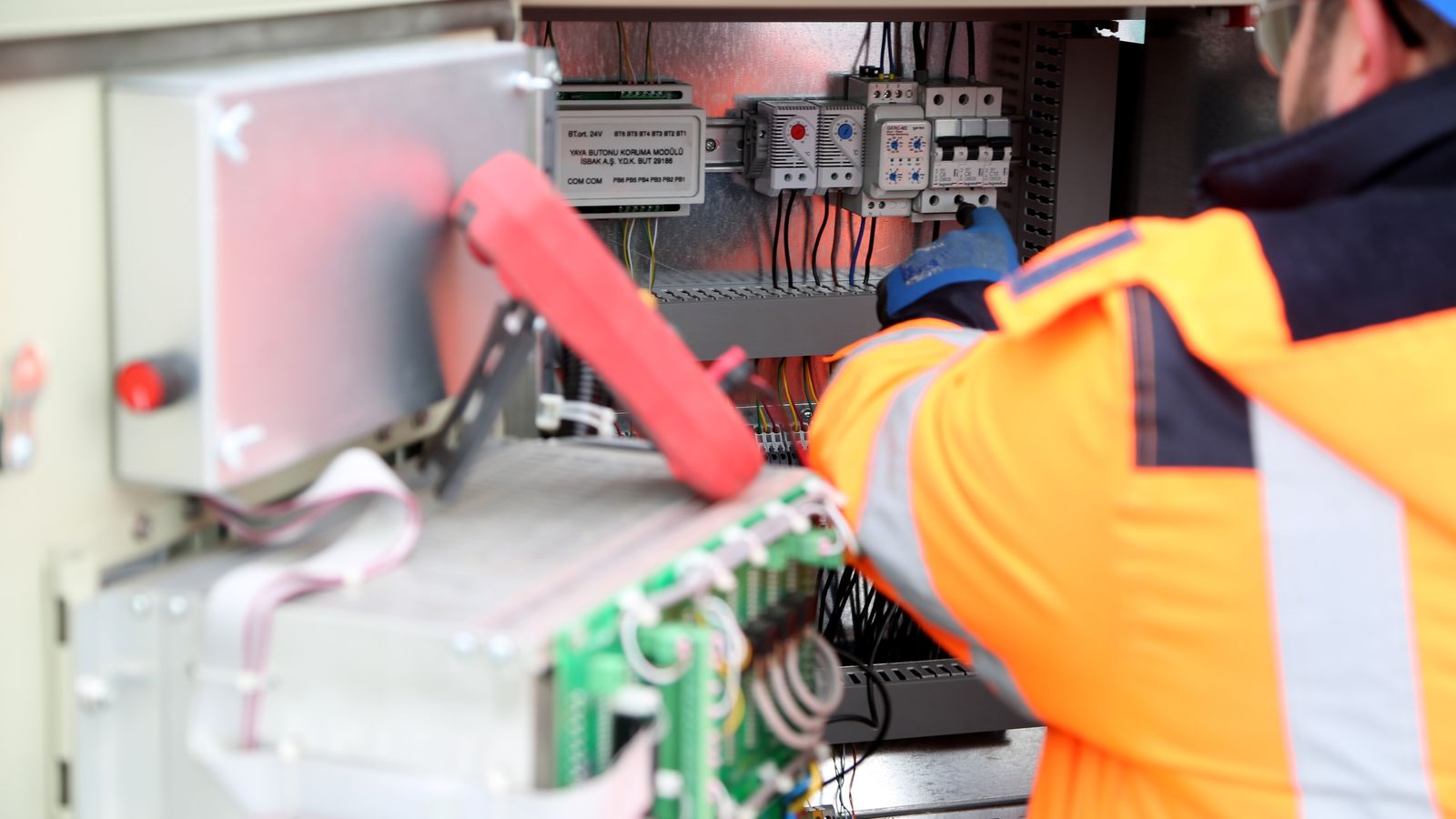
Advant Master-based systems have carried production for more than twenty years in many power, cement, paper and iron-and-steel plants. What these systems share is that they are reliable; what they also share are the difficulty of finding spare parts, the end of operating-system support and a shrinking number of people who know them. ASP Otomasyon’s Advant DCS expertise and System 800xA experience make it possible to treat this migration as a risk-management exercise.
A successful migration starts with the inventory, chooses the target architecture and migration strategy deliberately, compares old and new behaviour at FAT and is completed in a short planned shutdown with a rollback plan.
Inventory first: what do you have?
The quality of the migration plan cannot exceed the quality of the inventory. Capture:
- Controllers and I/O: types, counts, card models, redundancy status, field cabling and terminal layout.
- Application software: control programs, libraries, sequences, who wrote them and whether they are documented.
- Operator stations and graphics: process pages, alarm and event structure, trend and report definitions.
- Interfaces: connections to upper systems (SCADA, MES, historian) and other controllers; interfaces that use OPC DA should be marked separately.
- Spare parts and support status: stock, repair options and knowledgeable staff (see spares and lifecycle).
The by-product of the inventory is a risk map: failure of which part stops production, for which there is no spare, which knowledge sits with one person? The migration priority comes from this map.
Choosing a strategy
| Strategy | How it works | When it fits |
|---|---|---|
| Phased migration | The operator layer and/or controllers are moved unit by unit; old and new run together for a while | Continuous production matters, a long shutdown is not possible, units are independent |
| One-step migration | The whole system is replaced in one planned long shutdown | The plant already plans a long shutdown (maintenance period), interfaces are not complex |
| Operator layer first | Controllers are kept, graphics and server layer are renewed | The operator side is obsolete, controllers are sound, budget is spent in stages |
The real question behind the choice is: how long is the shutdown window and which risk is acceptable? For the general framework of migration strategy see modernizing legacy DCS systems.
Moving applications and graphics
Even where conversion tools can move control logic and graphics automatically, the result usually needs review. A practical approach: rather than moving logic as-is, verify and carry over the parts that must not change and that carry risk (safety interlocks, sequencers) one to one; renew the graphics together with operators, with improvements in alarm management and page standards. Respecting operators’ screen habits speeds acceptance of the migration.
FAT: compare old and new behaviour
In a migration FAT has an additional goal: to show that the new system gives the same control behaviour as the old. For this, outputs are compared in simulated input scenarios using recordings taken from the old system; differences are documented and each is tied to a deliberate decision. The record and open-item approach in FAT and SAT applies when preparing the FAT plan.
Cut-over day and rollback
- The cut-over time and duration are planned with production; an hour-by-hour scenario is written.
- Every step has a verification point and a rollback condition.
- The old system is kept in working state for a while so that a return is possible if a critical problem appears.
- Engineer support is on site in the first days after the cut-over and operator feedback is collected.
- The old system is retired only after stable operation has been demonstrated.
Common mistakes
- Comparing quotations without an inventory; prices given without equalizing scope are not comparable.
- Leaving interfaces (upper systems, other controllers) out of scope.
- Not involving the people who hold the knowledge in the migration.
- Not writing or rehearsing the rollback plan.
To assess your current system together, see our system upgrade page or contact our engineering team; the first step is usually the inventory and risk map.
Frequently asked questions
Must production stop during the migration?
It depends on strategy and system structure. In a phased migration the shutdown can be shortened unit by unit; short planned stops may still be needed when controllers are handed over.
Can existing field cabling be reused?
In many projects terminals and field cabling are kept, which reduces migration time and risk. What can be kept is determined during the inventory.
Why replace a system that still works?
Because the real risk is not today but the first major failure: if spares cannot be found and knowledge is dwindling, a small fault can become a long stop. A planned migration is far cheaper and safer than an unplanned stop.