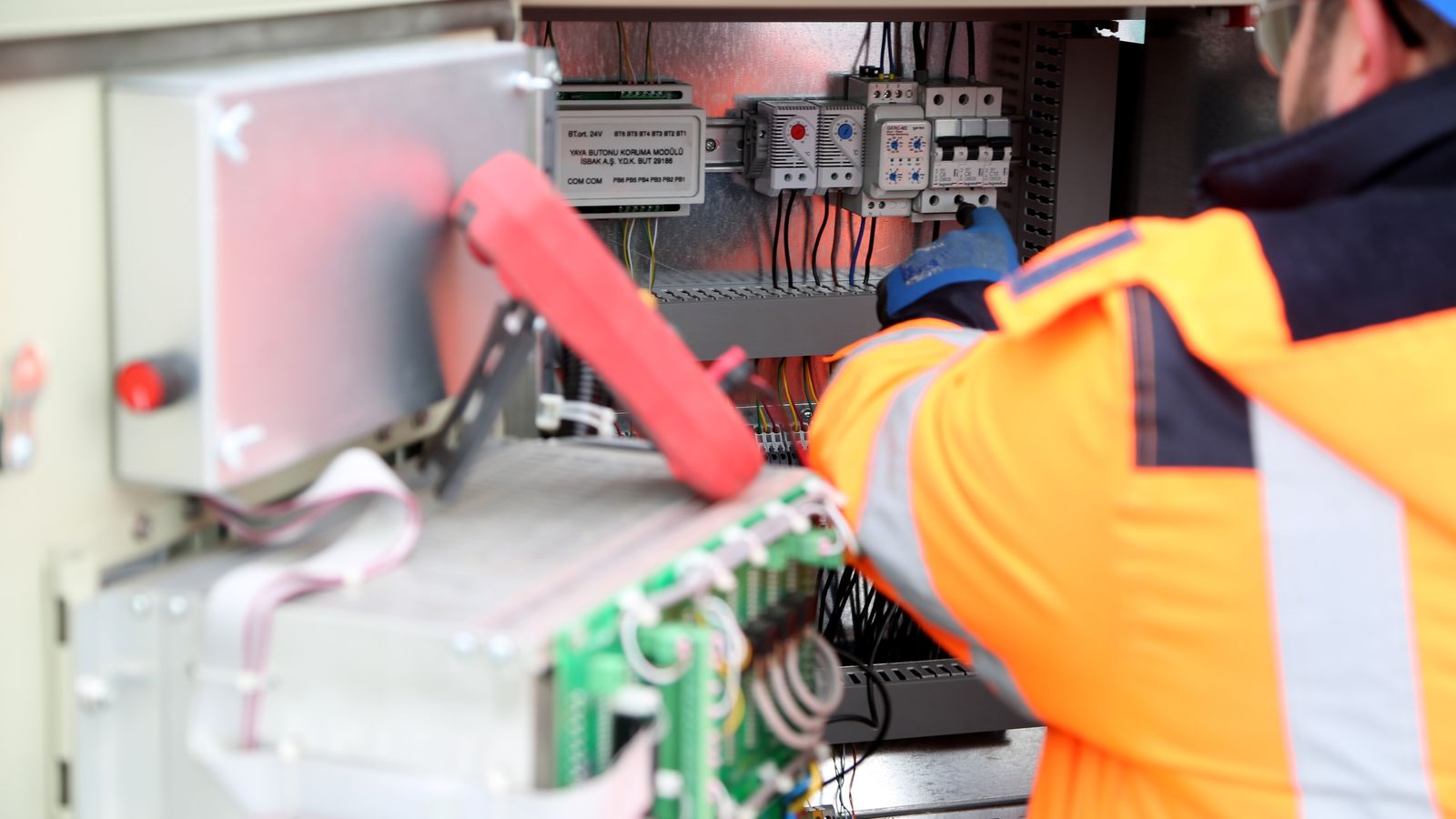
Many plants still produce with a DCS installed twenty or thirty years ago. The system works, but spare parts are running out, finding specialists is harder, and graphics and communications cannot meet new needs. Modernization means renewing this system in a planned, staged way without putting production at risk; the difference from “rip and replace” is that even the plant’s longest outage is designed in advance.
The key to success: prepare the new system beside the old one while it runs, prove it at FAT, cut over in a short planned outage and plan the way back from the start.
When should you decide to modernize?
- Vendor support or spare-part supply has ended or narrowed seriously.
- The system cannot be updated at operating-system and application level, and cybersecurity risk cannot be managed.
- Operator graphics and the alarm structure do not meet today’s operating needs.
- Passing data to upper systems such as MES, historian or energy monitoring is difficult or impossible.
- The people who carry the knowledge are retiring and documentation is incomplete.
For spares and lifecycle planning see DCS spares and lifecycle planning.
A phased approach
1. Inventory and risk
List the hardware (controllers, cards, power supplies, network), I/O counts and types, application software (control logic, graphics, reports), upper-system interfaces and existing backups. Parts with no backup, or known only to one person, are the highest risk. Output: a prioritized list of risks and dependencies.
2. Target architecture
Evaluate the next generation from the same vendor, a different platform, or a hybrid (staged) solution. The choice is made on preserving existing investment, reusing I/O, team competence and lifecycle cost. The decision can be taken together with PLC or DCS and SCADA vs DCS. For ABB Advant Master users, a detailed roadmap is in Advant Master to 800xA migration.
3. Parallel build and FAT
The new system is prepared while the old one runs. Control logic is migrated or rewritten, graphics are built and a factory acceptance test is run with simulated I/O (FAT and SAT). This is where risk reduction is most effective, because errors are found in a controlled setting and not in the live process.
4. Planned cut-over
The cut-over strategy varies by plant: a full cut-over (the whole system in one planned outage), a unit-by-unit cut-over, or an approach that leaves I/O in the field and replaces the controller (solutions that keep the wiring). Every option needs an hour-by-hour cut-over plan, responsible people, verification checklists and a clear rollback decision point. For site verification (SAT), loop checks are performed immediately after cut-over.
5. Stabilization and retirement
Operator and maintenance training, new documentation, the backup routine and alarm improvement are completed at this stage. The old system is not removed immediately; after an observation period it is retired with its backups taken (backup and restore).
Practices that shorten the outage
- Prefer solutions that keep existing field wiring and marshalling as far as possible; the longest outages come from cable removal and fitting work.
- Make the I/O list definitive before cut-over (I/O list engineering).
- Run loop checks with forms prepared in advance.
- Take a verified backup of all software and configurations before cut-over.
- Rehearse the rollback; a written plan alone is not enough.
- Plan night or weekend cut-over windows together with process safety and team fatigue.
How to forecast cost and schedule
Most of the cost comes not from hardware but from engineering (migrating control logic, graphics, testing, documentation) and the cut-over organization. Doing inventory and scoping early therefore makes proposals comparable (comparing technical specifications and proposals). To clarify scope you can use the project preparation checklist and downtime cost tools.
In upgrade and modernization projects, ASP Otomasyon prepares the inventory, target architecture, FAT, cut-over and rollback plan together, and runs the process end to end with its DCS system installation and service teams.
Frequently asked questions
Is it necessary to stop the plant to modernize?
Usually a short planned outage is needed, but because most of the preparation is done while the old system runs, the outage is shorter. Unit-by-unit cut-over and wiring-preserving solutions can reduce it further.
Can the old control logic be migrated as it is?
For some platforms, automatic conversion with tools is possible; in most cases the result needs review and testing. Simplifying the logic can also be considered as an opportunity.
Which systems should be modernized first?
Priority is set by weighing spare-part risk, dependence on a single person, security risk and process criticality together.